
Table of Contents
- What Professional Stage Pyrotechnic Powder Is (and What It Is Not)
- Pyrotechnic Licensing Requirements Before You Buy
- Comparing Stage Effects: Flame, Cold Sparks, Flash Pots, and Powder
- How to Verify a Pyrotechnic Stage Powder Supplier
- Pyrotechnic Powder Storage and Handling for Live Events
- Pyrotechnic Supplies for Live Events: Equipment Compatibility and Bundling
- Pricing, Purchase vs. Rental, and Total Cost of Ownership
- Conclusion
- Frequently Asked Questions
Last Updated: October 7, 2026
What Professional Stage Pyrotechnic Powder Is (and What It Is Not)
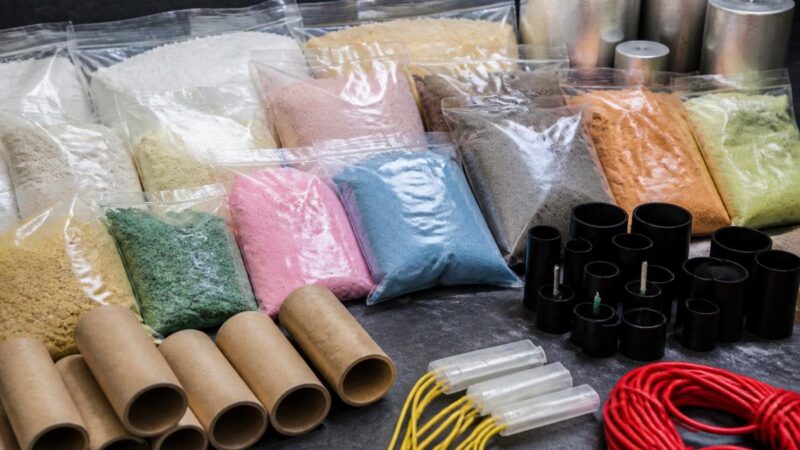
Professional stage pyrotechnic powder is a technical-grade pyrotechnic material formulated for controlled theatrical and live-event effects, not a consumer firework product. It is sold to licensed operators and approved venues for use in flash pots, spark fountains, and similar stage devices. At Flashpoint Logistics, we supply these materials to production companies, pyro engineers, and distributors who need verifiable documentation with every order.
The distinction matters more than most buyers realize. Consumer fireworks are packaged for public sale and governed by consumer product rules. Professional stage powder is a raw or semi-finished material used by a trained operator under a permit, and it falls into a different regulatory category. That category carries stricter storage, transport, and handling obligations.
Here is what professional stage pyrotechnic powder is not:
- It is not a substitute for commercial fireworks shells or aerial devices
- It is not a product you can legally buy without appropriate licensing
- It is not interchangeable with every effect machine on the market
- It is not a “one powder fits all effects” material
Many buyers come to us after a first purchase went wrong because they treated powder like any other consumable. It is not. The material you choose has to match the device, the venue, and the effect you are producing.
Pyrotechnic Licensing Requirements Before You Buy
Pyrotechnic licensing requirements vary by state, county, and sometimes city, so there is no single national license that covers every purchase. Before you buy professional pyrotechnic stage powder, confirm which permits apply to your operation, your storage location, and the venue where the effect will run.
Federal, state, and local layers stack. At the federal level, the Bureau of Alcohol, Tobacco, Firearms and Explosives explosives licensing guidance governs who may receive, possess, and store regulated explosive materials, and the Pipeline and Hazardous Materials Safety Administration governs how hazardous materials move in commerce.
Use this checklist to map your own situation before you place an order:
- Operator credential, confirm the person who will handle and fire the effect holds the license or certification your state requires, and that it is current for the show date.
- Purchaser or dealer license, if you are buying in bulk for resale or distribution, confirm whether a federal explosives license or state dealer permit applies to you.
- Storage permit, confirm the magazine or facility where the powder will live is permitted for the quantity and class of material you are buying. This is the step most buyers skip.
- Venue approval, get written sign-off from the AHJ for the specific venue, not a blanket approval for your company.
- Transport documentation, confirm what paperwork must travel with the material and who is authorized to sign for it.
- Local overlays, check whether the city or county adds its own permit, fee, or notification window on top of the state requirement.
Three practical rules cut most of the risk. First, match the permit to the quantity: a storage permit issued for a small magazine does not cover a bulk order, and over-storing is a violation even if every other document is in order.
Buying professional-grade powder without confirming your storage permit first is the most common compliance mistake we see. The consequence is not a fine, it is a shutdown order from the fire marshal that can cancel an entire run of shows.
Build a one-page compliance sheet for each show: operator credential, storage permit number, venue AHJ approval, transport documentation, and the local notification deadline. Keep a copy with the shipment and a copy at the venue. When an inspector arrives, the sheet answers most questions before they are asked.
Licensing is not one document. It is a stack, federal, state, local, and venue, and the purchase is only lawful when every layer matches the material, the quantity, the location, and the date.
Comparing Stage Effects: Flame, Cold Sparks, Flash Pots, and Powder
Different effects call for different materials, and choosing the wrong one wastes money and creates safety problems. Stage flame effects use a gas flame effect system with a fuel supply. Cold sparks use a dedicated spark machine that produces non-pyrotechnic sparks. Flash pots use a small charge of pyrotechnic powder to create a bright, brief burst. Spark fountains use a slower-burning composition for a sustained shower of sparks.
Here is how the main options compare for a live performance:
| Effect Type | Material Needed | Indoor Use | Typical Application |
|---|---|---|---|
| Stage flame | Gas flame effect unit | Restricted, needs approval | Concerts, theatrical reveals |
| Cold sparks | Spark machine, no powder | Yes, with venue sign-off | Weddings, club shows, tours |
| Flash pots | Pyrotechnic powder charge | Yes, with permit | Concerts, theater, TV |
| Spark fountains | Pyrotechnic composition | Yes, with permit | Stage fronts, entrances |
The practical takeaway: if you need a repeatable, low-paperwork effect, cold sparks and gas flame units are usually easier to place indoors. If you need the punch of a flash pot or fountain, you are in pyrotechnic territory and the licensing and storage rules apply in full.
How to Verify a Pyrotechnic Stage Powder Supplier
Verifying a supplier comes down to documentation, traceability, and whether they can answer technical questions without deflecting. Any provider can list powder for sale.
Start with the distinction. A professional stage-effect supplier sells commercially prepared, device-matched products with safety data sheets, lot traceability, and compatibility notes.
Ask for these before you commit:
- Proof of licensing to sell or distribute the material
- Safety data sheets for every product in the order
- Lot numbers and batch traceability
- Confirmation of technical-grade or high-purity specification
- Compatibility notes for your specific effect equipment
- Written storage and transport guidance
Then validate rather than accept. A safety data sheet should carry a revision date, a manufacturer or responsible party, and hazard identifiers that match the material you are buying, not a generic sheet reused across unrelated products.
A supplier who hesitates on any of these is a supplier worth walking away from. We have seen operations lose a season because a vendor could not produce a safety data sheet after a fire marshal inspection.
The other signal is responsiveness during peak season. If a supplier cannot confirm stock and delivery timing in writing, you are gambling on your show dates.
Ask a prospective supplier to walk you through one real order from quote to delivery, including the documentation that ships with the material. The answer tells you more about their operation than any product page will.
Verify in two passes: first confirm the supplier sells lawful professional stage products rather than raw chemicals, then confirm the paperwork is real, current, and traceable to the specific batch you are buying.
Pyrotechnic Powder Storage and Handling for Live Events
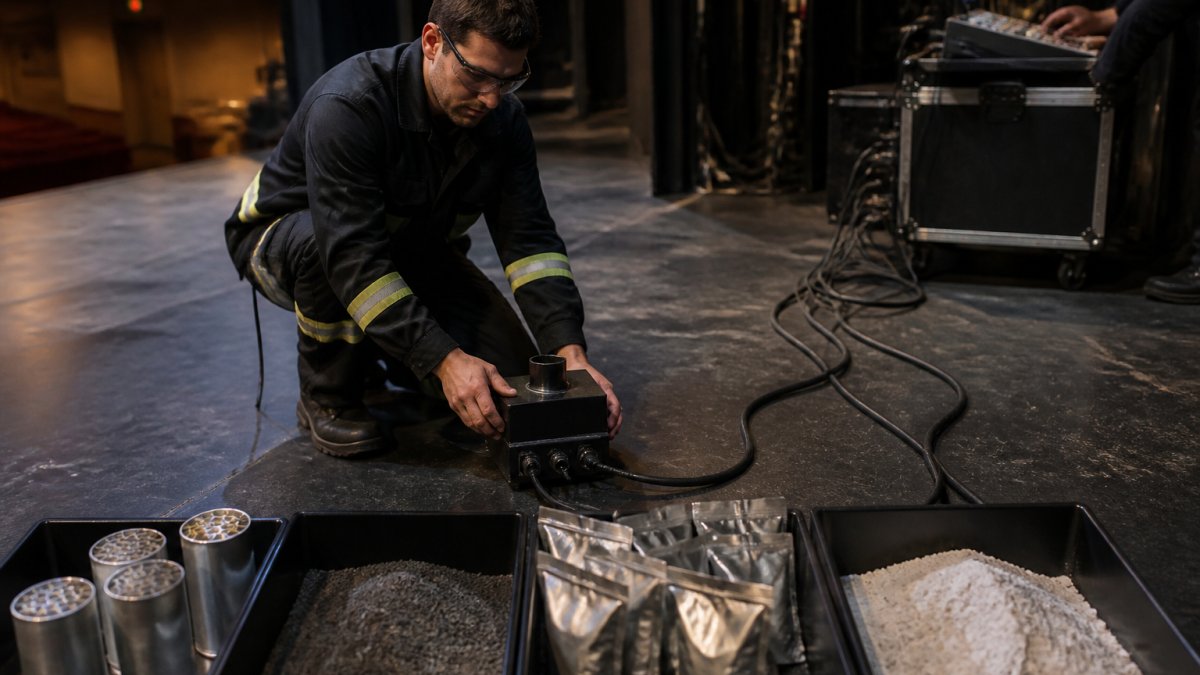
Pyrotechnic powder storage and handling rules exist because the material is genuinely hazardous when mishandled. Store powder in a dedicated magazine or approved container, away from heat, ignition sources, and occupied spaces. Keep quantities at the minimum needed for the run. Separate incompatible materials. Log every movement in and out.
On show day, the handling rules tighten further:
- Move only the powder needed for that performance to the venue
- Keep containers sealed until the operator is ready to load
- Never leave material unattended in a dressing room or truck cab
- Return unused powder to approved storage immediately after the show
Transport follows similar logic. Use approved containers, carry your documentation, and follow the route and timing rules your authority having jurisdiction sets. For federal transport requirements, the Pipeline and Hazardous Materials Safety Administration publishes the rules that govern hazardous materials in transit.
Pyrotechnic Supplies for Live Events: Equipment Compatibility and Bundling
Pyrotechnic supplies for live events only work when the powder, the device, and the control system are matched. A flash pot rated for one charge weight will not perform correctly with a different composition. A spark fountain built for a specific burn duration needs the right grain size. Get the match wrong and you get a weak effect, a misfire, or a safety incident.
When you bundle supplies, confirm three things:
- Device rating matches the powder specification
- Control system can trigger the device at the required timing
- Consumables (igniters, cabling, containers) are rated for the same setup
This is where a supplier with real industry knowledge earns their place. Flashpoint Logistics stocks stage effect machines, stage fluids, confetti, streamers, and powder products together, so you can source a compatible set instead of piecing it together from four vendors. Our team works with operations that run everything from a single flash pot to a full touring package.
Pricing, Purchase vs. Rental, and Total Cost of Ownership
Pricing for professional pyrotechnic stage powder depends on quantity, grade, packaging, and delivery timing, so we quote each order against the actual specification rather than publishing a flat rate. Current pricing is listed on our website, and we are happy to build a quote for a specific run.
The bigger financial question is purchase versus rental, and it usually comes down to frequency. If you fire effects a handful of times a year, renting devices and buying only the consumables keeps capital costs low. If you run shows regularly, owning your effect equipment pays back over a season and gives you control over scheduling.
Total cost of ownership includes more than the sticker price:
| Cost Category | Buy | Rent |
|---|---|---|
| Upfront equipment | Higher | Low or none |
| Consumables | Per show | Per show |
| Storage and permits | Ongoing | Minimal |
| Maintenance | Owner’s responsibility | Provider’s |
| Scheduling flexibility | Full control | Subject to availability |
We recommend buying when your show calendar is predictable and your storage is already permitted. Rent when your schedule is uneven or you are testing a new effect before committing.
Conclusion
The hardest part of buying professional stage pyrotechnic powder is not finding a seller. It is finding one who can back the sale with licensing, documentation, storage guidance, and equipment compatibility you can actually rely on. Get that wrong and you risk a shutdown, a misfire, or a cancelled show.
Flashpoint Logistics supplies stage effect machines, stage fluids, confetti, streamers, and powder products to pyrotechnics companies and live event producers, with same-day shipping, competitive pricing, and consulting from a team that knows the regulations. We work with operations of every size, from small pyro shops to wholesale distributors.
Get started with Flashpoint Logistics and source your next show with documentation and delivery you can plan around.
Frequently Asked Questions
Do you need a license to buy flash powder for stage use?
Yes. Flash powder and similar pyrotechnic stage powders are regulated under federal explosives law and require proper licensing. Buyers typically need a federal explosives license or permit, plus any state or local permits. Your supplier should verify your credentials before shipping. Never purchase from a vendor that does not ask for license documentation, because unlicensed purchases create serious legal exposure for your business and can result in fines or shutdowns.
What should professionals check before buying pyrotechnic stage powder?
Check four things: your operator and manufacturer licensing status, the supplier’s federal and state credentials, the product’s safety data sheet and technical grade, and whether the powder is compatible with your existing effect machines. Also confirm local fire marshal approval for your venue and review storage requirements. Flashpoint Logistics recommends documenting every supplier credential before placing an order, especially during peak event season when verification delays can cost you a show.
How should pyrotechnic powder be stored and handled for a live event?
Store powder in approved, sealed containers inside a locked, climate-controlled magazine away from heat, sparks, and incompatible chemicals. Keep quantities limited to what the show requires. During the event, only licensed pyrotechnicians should handle the product, and you should follow the manufacturer’s safety data sheet for transport and on-site staging. After the show, dispose of unused or damaged powder according to federal and local hazardous waste rules, never in regular trash.
Is it cheaper to buy or rent stage effect equipment and powder?
It depends on how often you produce shows. Rental makes sense for one-off events because you avoid storage, insurance, and maintenance costs. Buying pays off when you run regular performances and can spread the cost across many shows. Factor in licensing, storage compliance, transport, and disposal when comparing.