
Table of Contents
- Why Proper Stage Effect Storage Matters
- Confetti Storage: Keeping Consumables Dry and Ready
- Streamer Storage: Protection and Organization
- Managing Cables, Accessories, and Small Components
- Stage Effect Inventory Checklist and Labeling
- Environmental Controls and Safety Compliance
- Inspection, Maintenance, and Recommissioning Procedures
- Stage Effects Storage Checklist for Events and Venues
- Frequently Asked Questions
Last Updated: October 11, 2026
Why Proper Stage Effect Storage Matters
Stage effects are expensive investments. Confetti, streamers, pyrotechnic machines, and specialized lighting fixtures represent significant capital for event production companies and venues. Poor storage practices damage equipment, waste consumables, and create safety risks that can shut down operations.
At Flashpoint Logistics, we work with event professionals who understand that stage effect storage directly impacts both safety and profitability. Equipment stored incorrectly deteriorates quickly. Moisture ruins confetti. Cables tangle and break. Delicate mechanisms get crushed under improper stacking. The cost of replacement far exceeds the investment in proper storage systems.
Beyond economics, safety compliance is non-negotiable. Pyrotechnic materials, stage fluids, and powder products require controlled environments. Regulatory requirements demand documentation, inventory tracking, and secure storage protocols. A single compliance failure can result in fines, shutdowns, or worse.
The best approach combines three elements: organized physical storage, environmental controls, and systematic inventory management. This guide covers all three, with specific procedures you can implement immediately.
Confetti Storage: Keeping Consumables Dry and Ready
Confetti is a consumable product, but it’s not cheap when you buy in bulk. Moisture is the enemy. Confetti exposed to humidity clumps together and becomes unusable within days.
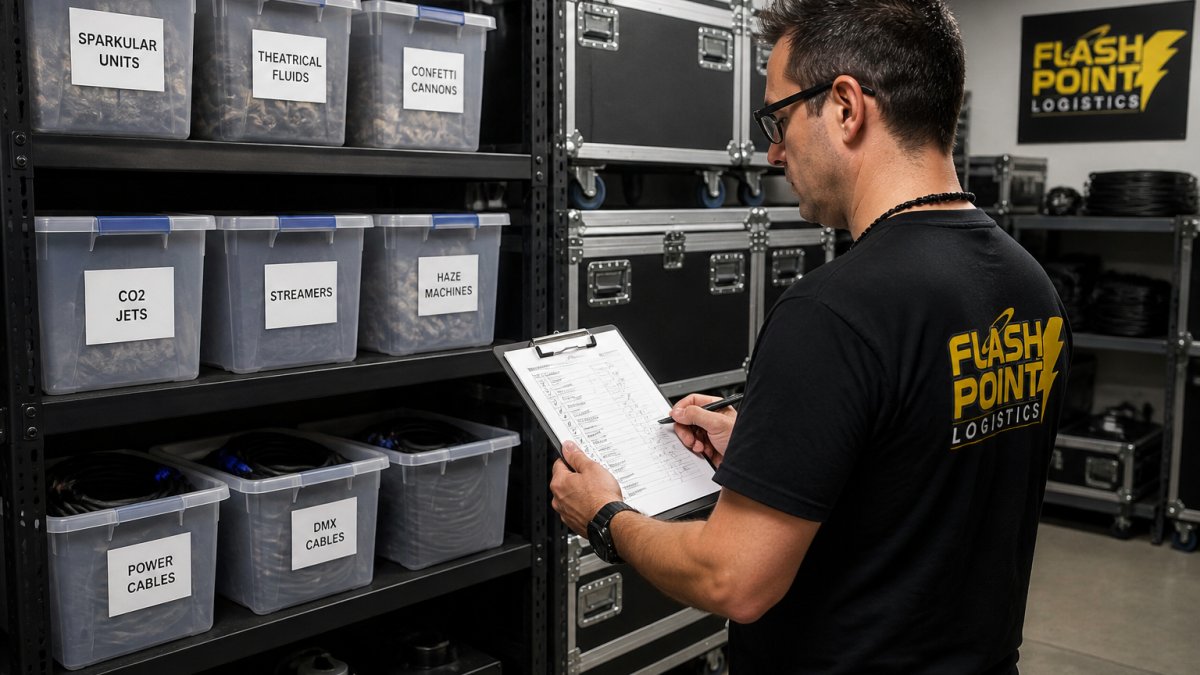
Store confetti in sealed plastic bins with tight-fitting lids. Clear bins let you see inventory at a glance without opening them. Label each bin with:
- Product type (metallic confetti, tissue confetti, etc.)
- Quantity
- Purchase date
- Expiration date (if applicable)
Keep bins in a climate-controlled space. Temperature swings and humidity spikes cause condensation inside sealed containers. A dedicated storage room with stable temperature and low humidity is ideal. If you don’t have climate control, use silica gel packets inside each bin to absorb moisture.
Stack bins vertically on shelving rather than piling them on the floor. Vertical organization saves floor space and makes inventory checks faster. Never stack confetti bins more than four high, weight pressure can compress the product and damage the containers below.
Store confetti away from direct sunlight. UV exposure fades colors over time, which matters if you’re using color-coordinated effects for specific events. A dark storage area is better than a bright one.
Label bins with QR codes linked to a simple spreadsheet. Scan the code during inventory checks to update stock levels instantly. This takes 30 seconds per bin and eliminates manual counting errors.
Streamer Storage: Protection and Organization
Streamers come in rolls or bundles. They’re lightweight but bulky, and they tangle easily. The goal is to keep them organized and protected from crushing.
Use clear plastic storage bins again, but orient them differently than confetti bins. Streamers should lay flat in bins rather than stand upright.
Organize by color or event type. If you run multiple events per month, color-coded bins make setup faster.
Add dividers inside bins to separate different streamer types. Cardboard dividers or plastic organizers keep rolls from shifting during transport. Shifting rolls lead to tangled mess that wastes time during setup.
Store streamer bins on shelving at eye level or slightly below. This positioning makes retrieval easy and reduces the risk of bins falling on staff.
Protect streamers from moisture the same way you protect confetti. Sealed bins with silica gel packets maintain the product condition.
Never store streamers near heat sources or open flames. Stage effects equipment stored near HVAC vents that blow hot air will dry out and become brittle. Keep storage areas away from heaters, direct sunlight through windows, and any ignition sources.
Managing Cables, Accessories, and Small Components
Cables are the silent killer of storage efficiency. A single tangled mass of cables can waste hours during setup and breakdown. Organized cable storage is non-negotiable.
Use cable management tools designed for this purpose:
- Velcro cable ties (reusable and adjustable)
- Cable sleeves (fabric tubes that bundle multiple cables)
- Coiled cable bags (pre-made storage with labeled sections)
Coil each cable individually before storage. Avoid tight knots, they damage the internal wires. Instead, use a loose figure-eight coil or wrap the cable around your forearm, then secure with a Velcro tie. Store coiled cables in labeled bins or hanging organizers.
Label both ends of every cable. Use color-coded tape or printed labels that identify the cable type and length.
Small accessories, pan and tilt mechanisms, connector adapters, spare bulbs, fuses, go in compartmented storage boxes. Hardware stores sell clear plastic organizers with adjustable dividers. These boxes fit on shelves and keep small items from getting lost.
Create a master inventory list of all cables and accessories. Update it quarterly. This prevents over-ordering and catches missing items before they become problems during an event.
| Item Type | Storage Method | Label Information | Location |
|---|---|---|---|
| Cables (XLR, power, DMX) | Coiled in labeled bins | Cable type, length, gauge | Low shelving |
| Pan and tilt mechanisms | Compartmented boxes | Part number, quantity | Eye-level shelving |
| Connectors and adapters | Clear organizer boxes | Connector type, quantity | Eye-level shelving |
| Spare bulbs and fuses | Labeled containers | Wattage, voltage, quantity | Secure cabinet |
Stage Effect Inventory Checklist and Labeling
An inventory checklist is your baseline. It tells you what you own, where it is, and when it was last used. Without it, you’re guessing.
Create a master inventory list that includes:
- Equipment name and description
- Serial number or asset tag
- Purchase date
- Last maintenance date
- Current location
- Condition (working, needs repair, retired)
Use a spreadsheet or simple inventory management tool. Update it after every event. If equipment gets damaged or moved, log it immediately. This takes two minutes per item and prevents confusion later.
Label everything with consistent, visible labels. Use a label maker for professional appearance and durability. Handwritten labels fade and peel. Printed labels last through multiple seasons.
Label placement matters. Place labels where they’re visible without moving equipment. For flight cases, label the top and one side.
Color-coded labels speed up organization. Use one color for confetti equipment, another for streamers, another for lighting. This visual system helps crews sort equipment quickly during setup and breakdown.
Create a laminated quick-reference card for each event type. The card lists all equipment needed, quantities, and storage locations.
A complete inventory checklist reduces setup time by 30-40% and prevents equipment loss. The time invested in creating and maintaining it pays for itself within two events.
Environmental Controls and Safety Compliance
Stage effects equipment and consumables are sensitive to environmental conditions.
Maintain storage areas at 65-75°F with relative humidity between 40-60%. This range protects most stage equipment and consumables. Use a simple hygrometer (humidity meter) to monitor conditions.
If your storage area lacks climate control, use portable dehumidifiers during humid months. Place them in the storage room and run them continuously.
Ensure adequate air circulation. Stagnant air traps moisture and promotes mold growth on equipment and packaging. Use ceiling fans or portable air circulation fans.
Inspect stored equipment monthly. Look for signs of moisture, rust, mold, or pest damage. Catch problems early before they spread. Document inspections in your inventory log.
Stage fluids and powder products require separate secure storage. Follow all manufacturer guidelines for storage temperature, ventilation, and containment. Keep material safety data sheets (MSDS) accessible.
Fire safety is critical. Keep fire extinguishers rated for the types of materials you store.
Inspection, Maintenance, and Recommissioning Procedures
Equipment sitting in storage degrades over time. Regular inspection catches problems before they cause failures during events.
Develop a quarterly inspection schedule. For each piece of equipment, check:
- Physical damage (cracks, dents, corrosion)
- Electrical connections (loose, corroded, or damaged)
- Moving parts (stiff, broken, or misaligned)
- Consumables (expired, degraded, or depleted)
Document every inspection. Note the date, inspector name, equipment condition, and any repairs needed. This creates a maintenance history that helps predict failures.
Before any event, run a full test of all equipment you plan to use. Don’t assume it works because it worked last time.
Repair or replace equipment that fails inspection. Never use questionable equipment in a live event. The cost of replacement is always less than the cost of failure during a show.
For equipment that’s been in storage for months, recommission it before use. Run diagnostics, clean connections, test all functions.
Keep spare parts on hand for common failures. Extra bulbs, fuses, connectors, and cables let you fix problems immediately instead of shutting down an event. Stock based on your equipment and usage patterns.
Stage Effects Storage Checklist for Events and Venues
Use this checklist to audit your current storage setup and plan improvements. Check off items as you implement them.
Physical Storage Setup
- Designated storage area separate from event spaces
- Shelving units rated for equipment weight
- Clear plastic bins with tight-fitting lids
- Labels on all bins and equipment
- Cables coiled and organized in labeled storage
- Small parts in compartmented organizer boxes
- Heavy items stored low, light items stored high
- Fire extinguishers mounted and accessible
- Clear floor space for safety and movement
Environmental Controls
- Temperature maintained between 65-75°F
- Humidity maintained between 40-60%
- Hygrometer installed to monitor conditions
- Dehumidifier in use during humid months
- Air circulation fans running to prevent stagnant air
- Silica gel packets in sealed bins
- No direct sunlight on stored equipment
- Storage area away from heat sources
Inventory and Documentation
- Master inventory list created and updated
- All equipment labeled with serial numbers or asset tags
- Color-coded labels for equipment categories
- Quick-reference cards for each event type
- Quarterly inspection schedule implemented
- Inspection logs maintained and reviewed
- Material safety data sheets accessible for all products
- Maintenance history documented for each item
Safety and Compliance
- Staff trained on proper equipment handling
- Staff trained on fire safety procedures
- All pyrotechnic materials stored per regulations
- Stage fluids stored in approved containers
- Powder products in secure, ventilated storage
- Emergency procedures posted and reviewed
- First aid kit available in storage area
- Regular safety audits conducted
Proper stage effect storage is the foundation of safe, efficient event operations. The procedures outlined here, organizing by category, controlling environment, maintaining inventory, and inspecting regularly, are standard practice among professional event production companies.
Flashpoint Logistics works with event professionals who need reliable sourcing for confetti, streamers, stage effect machines, and powder products. Our same-day shipping and expert consulting help you build the systems that keep your equipment ready and your events running smoothly. Shop Now to explore our full range of stage effects supplies and discuss your specific storage needs with our team.
Frequently Asked Questions
How should stage effects be stored between events?
Store stage effects in a designated, climate-controlled storage area away from direct sunlight and moisture. Use labeled plastic bins or flight cases to protect confetti, streamers, and delicate equipment. Keep heavy items on lower shelves and organize by category. Ensure the space has good air movement to prevent dust accumulation and mold. Check storage conditions monthly and keep an updated inventory list to track what’s stored and when it was last inspected.
What should a stage effects storage checklist include?
A stage effects storage checklist should include: equipment count and condition, labeling verification, moisture and dust protection status, fire safety compliance, cable organization, shelving capacity and weight distribution, environmental controls (temperature and humidity), hazardous materials documentation, access logs, and inspection dates. Include sections for confetti and streamers with separate notes on packaging integrity. Document any damage, missing items, or maintenance needs and schedule regular reviews to keep the checklist current.
How do you prevent dust, moisture, and crushing from damaging stage effects?
Use clear plastic bins with tight-fitting lids to seal out dust and moisture. Store confetti and streamers in airtight containers away from humidity sources. Elevate bins off the floor using shelving and vertical space to reduce moisture exposure. Never stack heavy items on top of delicate lighting equipment or streamers. Maintain air movement in the storage area to prevent stagnant, humid conditions. Inspect bins quarterly for condensation or damage and replace any compromised packaging immediately.
How often should stored stage effects be inspected?
Inspect stored stage effects at least quarterly, and monthly during peak event season. Check for moisture intrusion, dust accumulation, pest damage, and equipment degradation. Test lighting fixtures and mechanical components every six months to ensure they function properly before events. Document all inspections in your inventory system and note any repairs needed. Before each event, perform a final walk-through of your storage area to verify that all booked equipment is present, undamaged, and ready for transport and setup.