
Table of Contents
- Understanding Stage Effect Machines and Their Role in Live Events
- Stage Fog Machines: Creating Atmospheric Depth
- Haze Machines for Events: Sustaining Visual Impact
- Cold Spark Machines and Flame Effects: High-Impact Visual Drama
- Confetti Machines for Events: Audience Engagement and Celebration
- Stage Effect Machine Safety: Compliance, Permits, and Best Practices
- Selecting and Sourcing the Right Equipment for Your Event
- Frequently Asked Questions
Last Updated: October 12, 2026
Understanding Stage Effect Machines and Their Role in Live Events
Stage effect machines create visual drama at live performances, generating fog, sparks, flames, confetti, and other atmospheric effects.
The right machine can mean the difference between a forgettable performance and a memorable one.
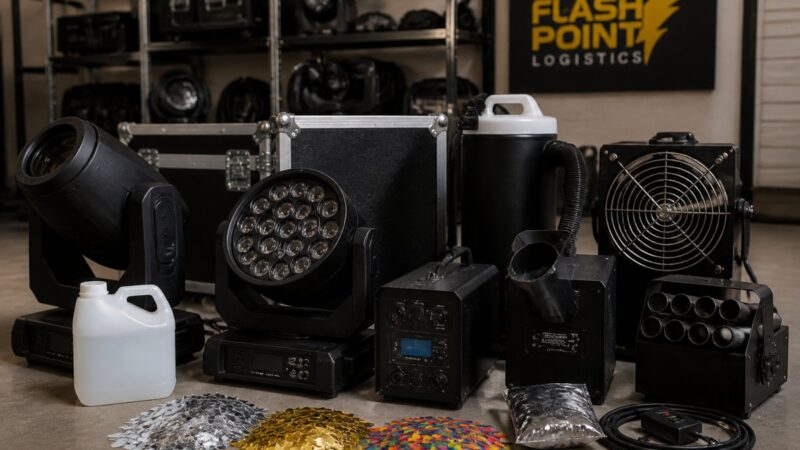
Flashpoint Logistics sources stage effect machines and supplies for event professionals, understanding the technical, safety, and logistical challenges of real-world venues. This guide breaks down the major categories.
Stage Fog Machines: Creating Atmospheric Depth
A fog machine heats a specialized fluid to create visible water-based vapor that hangs in the air, enhancing lighting effects and adding visual depth.
Fog machines are the most widely used stage effect equipment because they’re versatile, affordable, and effective in almost any venue.
Key specs include power rating (typically 400W to 1500W), output volume, and heat-up time.
Fog dissipates over time, so large venues may need continuous operation. Machines also require regular fluid refilling and occasional cleaning to prevent mineral buildup.
Haze Machines for Events: Sustaining Visual Impact
A haze machine for events creates a fine, suspended mist that lingers longer than fog.
Haze machines suit venues wanting subtle enhancement rather than dramatic fog, theaters, concert halls, and upscale events, maintaining consistent visual impact throughout a performance.
Professional haze machines feature DMX512 compatibility for synchronization with lighting cues, with adjustable output density to match venue size.
Haze machines require more frequent fluid refilling than fog machines, so plan adequate supply during peak season.
Cold Spark Machines and Flame Effects: High-Impact Visual Drama
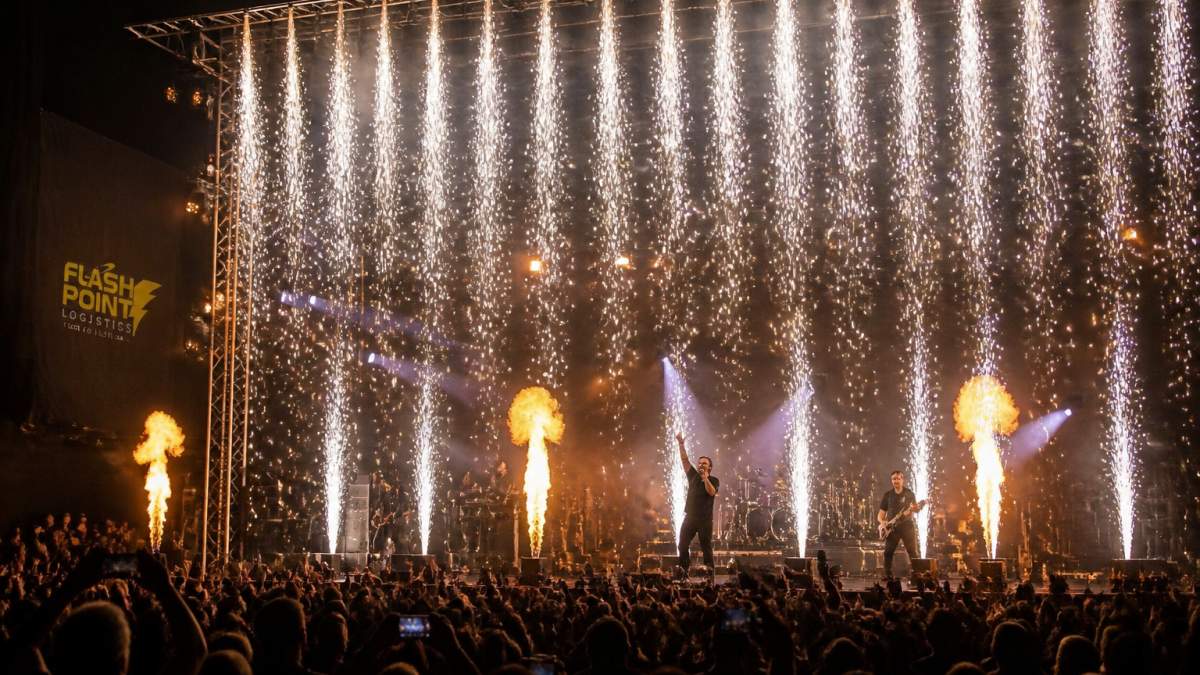
Cold spark machines and flame projectors generate the biggest audience reaction, and the most operational risk. They differ in mechanism, consumables, clearance requirements, and regulation.
How Cold Spark Machines Actually Work
A cold spark machine does not burn anything. A heated chamber (roughly 1,000-1,300°F internally) vaporizes a titanium-based granule, and compressed air or an internal blower propels the particles upward. They cool almost instantly, which is why the effect reads as “cold” and is generally permitted indoors where open flame is not.
Key operating specs to compare across units:
- Spray height: Most professional units throw 10-30 feet vertically; compact units sit in the 6-15 foot range. Height depends on blower pressure and granule feed rate, not just wattage.
- Granule consumption: A typical unit burns through a hopper in roughly 30-90 seconds of continuous firing. Granule cost is a per-second consumable, not a per-event one.
- Warm-up: Expect 3-8 minutes before the first shot. Some units allow rapid re-fire; others need a cooldown cycle between bursts.
- Control: DMX512 is standard on professional units, usually occupying 2-4 channels (fire trigger, height/output, sometimes a safety arm channel). Many units also accept a wired or wireless remote.
How Flame Projectors Differ
Flame projectors use liquid or gas fuel (commonly propane, butane, or a liquid fuel cartridge) and an ignition system to project a controlled flame column. They are not the same product as cold sparks and should never be specified interchangeably.
- Flame height and duration: Units range from small handheld torches producing 3-6 foot flames to stage projectors throwing 15-30 feet. Duration per trigger is usually fractions of a second to a few seconds.
- Fuel logistics: Fuel cartridges are a recurring cost and a storage/transport consideration. Many venues will not allow fuel on the premises.
- Clearance: Flame effects require substantially larger clearances than cold sparks, both overhead and to the sides, and the required distances are set by the authority having jurisdiction, not the manufacturer.
The Comparison Buyers Actually Need
| Factor | Cold Spark | Flame Projector |
|---|---|---|
| Heat at effect | Effectively none at distance | Open flame, radiant heat |
| Indoor use | Commonly allowed | Frequently prohibited |
| Consumable | Titanium granules | Fuel cartridges |
| Typical permit burden | Low to moderate | High; often licensed |
| Operator training | Equipment-specific | Fuel handling + ignition protocol |
| Insurance | Sometimes excluded | Usually requires a rider |
Never assume a cold spark machine is “permit-free.” Many jurisdictions still classify it as a pyrotechnic or special effect device, and some venues require advance written approval, a fire watch, or a licensed operator regardless of the absence of flame. Confirm requirements with the venue and the local fire authority before you load in.
Positioning and Clearance in Practice
Both effect types demand three checks before the first cue: overhead clearance (so sparks or flame don’t contact rigging, drapery, or ceilings), lateral clearance (so the effect doesn’t reach the audience, performers, or combustible set pieces), and sight lines (so it’s visible and not blocked by truss or video walls). Experienced operators walk the effect path with the venue’s fire marshal during load-in rather than relying on the spec sheet.
Choosing Between Them
Indoors, with a mixed audience, or where open flame is restricted, cold sparks are almost always the practical choice. With a licensed pyro operator, documented safety plan, appropriate insurance, and a venue that permits flame, a flame projector delivers an effect cold sparks cannot replicate.
Confetti Machines for Events: Audience Engagement and Celebration
Confetti machines for events use compressed air or electronic firing mechanisms to launch confetti, streamers, or other materials, creating celebration moments popular at weddings, award ceremonies, and festival closings.
Confetti machines come in two types: handheld cannons for targeted bursts and fixed units mounted on stage structures.
Confetti material affects visual impact and cleanup: metallic, tissue paper, and biodegradable options exist, with biodegradable increasingly preferred for outdoor or strict-cleanup venues.
Confetti machines are among the most straightforward stage effect machines to operate, minimal setup, immediate results, no fluid refilling or heat-up.
Stage Effect Machine Safety: Compliance, Permits, and Best Practices
Safety and compliance determine whether your effect actually happens on show day. They are the first filter that eliminates most equipment options for a given venue.
Who Regulates Stage Effects
There is no single national permit for stage effects. Authority is layered across:
- Local fire authority (the authority having jurisdiction, or AHJ): The fire marshal or fire prevention office where the venue sits. The AHJ interprets and enforces the applicable fire code and issues (or denies) permits for pyrotechnic and flame effects.
- State and local fire codes: Most jurisdictions adopt a model fire code, commonly the International Fire Code (IFC) or NFPA 1, then amend it. The adopted edition and local amendments govern your effect, not the model code itself.
- NFPA 1123 and NFPA 1126: NFPA 1123 covers outdoor fireworks displays; NFPA 1126 covers pyrotechnics before a proximate audience (most relevant to indoor flame and spark effects). These are consensus standards, not laws, but many AHJs enforce them by reference.
- OSHA: Applies to worker safety at the venue, including handling, storage, and operation of equipment by employees.
Permits You May Need
- Pyrotechnic special effects permit: Required in many jurisdictions for flame effects and, in some, for cold spark devices. Applications typically require a site plan, effect description, operator credentials, and proof of insurance.
- Open burn / open flame permit: Sometimes required separately from a pyrotechnics permit.
- Fire watch: Some AHJs require a dedicated fire watch, a person whose only job is to monitor the effect and standby with extinguishing equipment, for the effect’s duration.
- Certificate of insurance: Nearly always required, with the venue named as additional insured.
Start the permit process as early as the venue contract allows. Permit review timelines vary widely, and a late application is one of the most common reasons an effect gets cut from a show.
Insurance Mechanics
General event liability policies frequently exclude pyrotechnic and flame effects, or cover them only with a specific endorsement (rider). Confirm in writing whether the policy covers your effect type and whether it requires a licensed operator, minimum clearance, or fire watch. If excluded, a special-event or pyro-specific policy may be available but usually must be bound well before the event date.
Clearances and the Concepts That Matter
Clearance requirements are set by the AHJ and the applicable standard, not the manufacturer’s spec sheet. The concepts you will be asked about:
- Effect-to-audience distance: The minimum separation between the effect and the nearest audience member.
- Overhead clearance: The vertical distance between the effect and any overhead obstruction, including rigging, drapery, and ceiling.
- Lateral clearance: Separation from combustible materials, set pieces, and performers.
- Fallout zone: The area where sparks, embers, or debris may land, which must be kept clear of combustibles.
Operator Training and Documentation
For flame effects, many jurisdictions require a licensed pyrotechnician or documented trained operator. Even where not required, this documentation is standard practice and will be requested by venues and insurers:
- Operator credentials and training records
- A written safety plan describing the effect, clearances, and emergency shutdown procedure
- Equipment maintenance and inspection logs
- Material safety data sheets (SDS) for fuels, fluids, and granules
- A pre-show safety briefing with venue staff
Maintenance and Consumable Safety
- Fog and haze machines: Clean the heating element and fluid path on the manufacturer’s schedule to prevent mineral buildup, which can cause sputtering, reduced output, and in some cases a fire hazard.
- Cold spark machines: Inspect the heating chamber and blower, and keep granules dry and free of debris. A clogged feed is the most common cause of a failed effect mid-show.
- Flame projectors: Manage fuel cartridge inventory, inspect ignition components, and follow the manufacturer’s storage and transport rules.
The single most useful habit is to treat the venue and the AHJ as partners, not obstacles. A short conversation during load-in about clearances, fire watch, and shutdown procedure prevents the last-minute decision that kills your effect.
Selecting and Sourcing the Right Equipment for Your Event
Choosing the right stage effect machines depends on venue size, event type, budget, technical capabilities, and regulatory environment.
Consider total cost of ownership, not just purchase or rental.
Sourcing from specialized suppliers ensures professional-grade machines with proper documentation and support.
Here’s a quick reference for matching machines to common event types:
| Event Type | Recommended Machines | Primary Benefit |
|---|---|---|
| Wedding reception | Fog machine, confetti cannons | Atmosphere and celebration moments |
| Concert or festival | Fog, haze, cold spark, confetti | Dramatic visual impact during key moments |
| DJ set or nightclub | Haze machine, cold spark | Sustained atmospheric enhancement |
| Theatrical production | Haze machine, fog | Subtle atmospheric support for lighting design |
| Corporate event | Fog machine, confetti | Professional atmosphere without excessive drama |
Suppliers who understand your venue constraints, regulatory environment, and technical requirements simplify selection. Guidance on compatibility, DMX setup, and consumable planning ensures your stage effect machines deliver the visual impact you want without surprises.
Selecting the right stage effect machines transforms how your audience experiences a live event. Flashpoint Logistics specializes in sourcing professional-grade stage effect machines, stage fluids, confetti, and related supplies for event producers, pyro engineers, and live event professionals. Our team provides expert guidance on equipment selection, safety compliance, and consumable planning to help your event succeed. Explore our full range of stage effect equipment and supplies to find the right machines for your next event.
Frequently Asked Questions
What’s the difference between a fog machine and a haze machine for events?
Fog machines produce thick, visible clouds that dissipate quickly, ideal for dramatic entrances and localized effects. Haze machines emit fine particles that linger in the air, creating sustained atmospheric depth that interacts with stage lighting. Fog works best for short bursts; haze sustains the visual effect throughout a performance. Most professional venues use both for different moments in a show.
Are stage effect machines safe to use indoors?
Yes, when properly operated and maintained. Fog and haze machines are safe indoors if venue ventilation is adequate. Cold spark machines are pyrotechnic devices requiring compliance with local fire codes. Confetti machines must use fire-safe materials. Always verify your venue’s fire marshal approval, obtain required permits, and ensure operators are trained. Insurance requirements vary by effect type and venue.
Which stage effect machines work best for weddings versus concerts?
Weddings typically use fog machines for ceremony atmosphere and haze for ambient lighting effects, avoiding loud or overly dramatic pyrotechnics. Concerts leverage the full range: cold sparks, flames, CO2 jets, and confetti for high-energy moments. DJ sets benefit from synchronized fog and haze with lighting. Theatrical shows use precise timing and layered effects. Choose based on your venue’s capacity, guest comfort, and the emotional tone you want to create.
Should I rent or buy stage effect equipment for my events?
Rent if you host occasional events or need diverse effect types without long-term commitment. Buy if you produce frequent shows and can justify equipment investment, maintenance, and consumable costs. Rental eliminates storage, maintenance, and repair liability while providing access to professional-grade machines. Ownership offers cost savings over time and full creative control. Many professionals hybrid-source: own core equipment and rent specialized machines for specific events.