
Last Updated: November 15, 2026
Quick Summary
Live event visual impact in 2026 depends on three things: how well the stage looks on camera and in person, how evenly the audience can see it, and whether effects serve the story. Define the visual goal first, then choose equipment that supports it. Plan lighting, sightlines and contingencies early.
- Define the visual goal first, then choose equipment that serves it.
- Assign each layer a role: hero content, environmental texture, or performer separation.
- Check sightlines from the farthest seats, including standing and accessible positions.
- Rank budget by audience reach, funding stage-wide lighting and the main screen first.
- Keep a contingency reserve separate from the creative budget, and back up each critical cue.
Table of Contents
- What Drives Live Event Visual Impact in 2026
- Live Event Production Trends 2026 Shaping Stage Visuals
- Live Event Lighting Design: Building Depth and Focus
- Stage Effects for Events: Choosing What Earns Its Place
- Event Production Planning: Sightlines, Budget and Contingency
- Step-by-Step Implementation for Your Next Show
- Measuring Visual Impact and Planning Your Next Production
- Frequently Asked Questions
What Drives Live Event Visual Impact in 2026
Live event visual impact in 2026 comes down to three things: how well the stage looks on camera and in person, how evenly the audience can see it, and whether the effects serve the story rather than distracting from it. Pyrotechnics and live event producers often start with that question before they buy a single fixture.
Most productions chase the newest gear. The better approach is to define the visual goal first, then choose equipment that serves it. A stage that needs a dramatic reveal calls for different tools than one built around a steady, legible backdrop for corporate messaging.
Keep three questions in front of your team from the first planning meeting:
- What should the audience feel in the first ten seconds?
- Which moments must read clearly from the back row and on the livestream?
- Which effects are essential, and which are decoration?
Teams that answer these early avoid the most expensive mistake in production planning: adding effects late to fix a visual problem that lighting or staging would have solved for less money.
Live Event Production Trends 2026 Shaping Stage Visuals
The biggest shift in live event production trends for 2026 is the move toward layered visuals. Instead of one dominant screen or one spotlight rig, productions combine LED surfaces, projection, lighting and haze so the stage reads differently from each seat.
That layering works because each medium covers a different visual job. LED walls deliver high brightness and crisp motion for close camera shots, but they can look pixelated from the back row if pixel pitch is too coarse for the viewing distance. Projection blends into set pieces and scrims for a softer, more atmospheric look, but it washes out under strong stage light and needs a dark surface to read.
AI-driven content tools are also changing the workflow. Teams can generate and adjust visual cues faster, which means more time goes to rehearsal and less to last-minute redesign. The tradeoff is that automated visuals still need a human reviewing color, pacing and legibility before showtime.
Audio-visual integration matters more than it used to. When sound cues, screen content and lighting changes are not synchronized, even a strong design feels amateur. Build a single cue sheet that every operator follows, and rehearse transitions, not just the individual elements.
Two trends are worth planning for now. First, sustainability is shaping equipment choices: reusable LED panels and modular set pieces are replacing single-use printed builds because they cut material waste and shipping weight, and many venues now ask for power draw estimates before load-in. Second, accessibility is becoming a visual design requirement, not an afterthought, high-contrast captions, readable text sizes on screens, and sightlines that work for seated and standing audiences.
Watch out: Layering too many media at once can create visual noise that competes with the message. Cap the number of simultaneous focal points per scene and check the result from the farthest seat and through every camera before committing.
Live Event Lighting Design: Building Depth and Focus
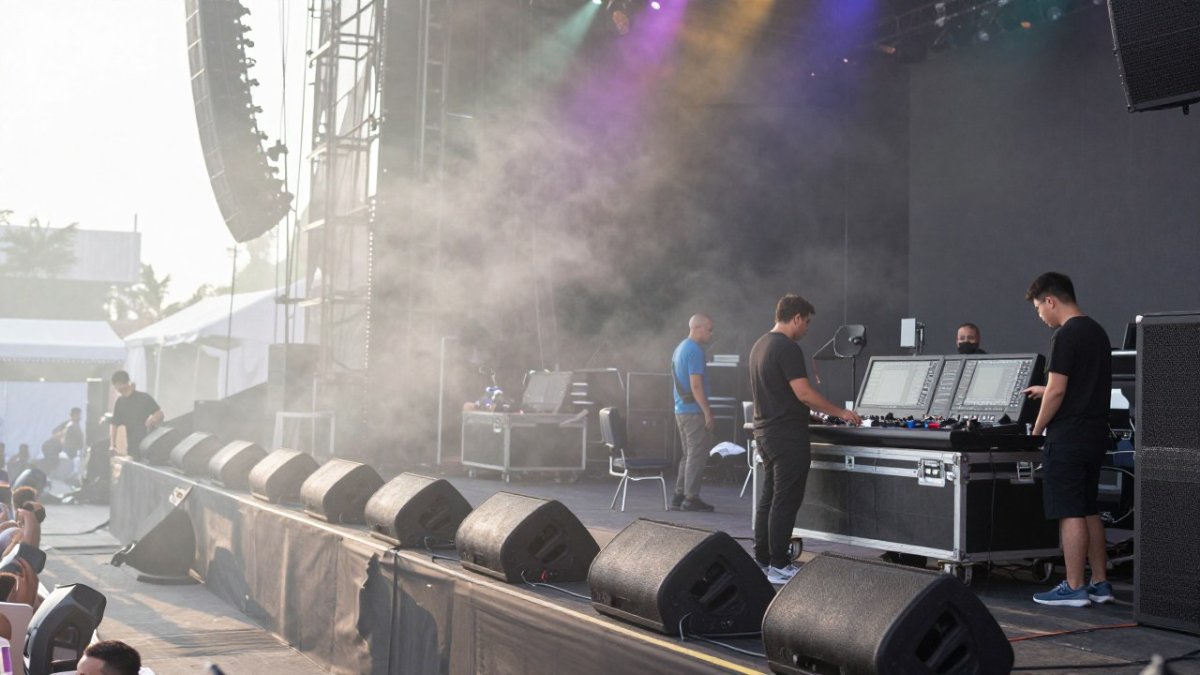
Lighting does more for live event visual impact than almost any other element. Layering front light, backlight and side light creates depth that flat, evenly lit stages lack. Use backlight to separate performers from the background and side light to reveal texture on sets and faces.
Focus matters as much as brightness. A common mistake is running every fixture at full intensity, which flattens the image and tires the audience. Reserve peak output for the moments that need it and let the rest of the show breathe.
Plan lighting around the cameras too. A design that looks excellent to the live audience can wash out on a livestream if the color temperature and contrast are not checked during a camera rehearsal.
Stage Effects for Events: Choosing What Earns Its Place
Stage effects such as haze, confetti, streamers and pyrotechnic powder can transform a moment, but each one adds cost, setup time and safety requirements. Evaluate every effect against the moment it supports. If it does not heighten a specific beat, cut it.
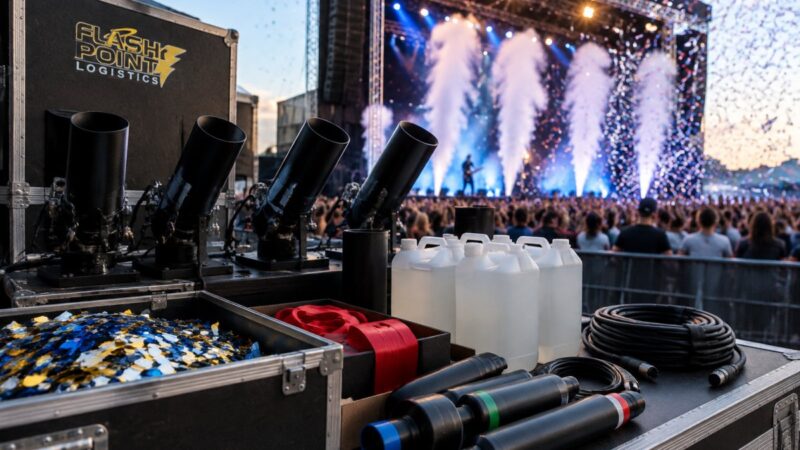
Flashpoint Logistics offers stage effect machines, stage fluids, confetti, streamers and powder products. You can compare specific effect machines before committing budget. When comparing options, look at output consistency, how quickly the machine recovers between cues and whether it runs cleanly on the power your venue provides. Other providers may offer different equipment, so compare specifications rather than brochures.
Stage fluid choice also affects results. Confirm the fluid suits your machine and your venue’s air handling, and test haze density in the actual room before the event, because a fog that looks ideal in a warehouse can overwhelm a smaller space.
Watch out: Never run a haze machine without confirming the venue’s fire and smoke rules and notifying the venue and fire marshal in advance, since many jurisdictions regulate effects and require permits.
Event Production Planning: Sightlines, Budget and Contingency
Good visual impact depends on planning that starts well before load-in. Map sightlines from the seats farthest from the stage, not just the front row.
Budgeting is where most visual plans succeed or fail. A practical way to prioritize is to rank spending by how many audience members each dollar reaches.
Budget for contingency, not just the planned build. See what professional stage effect rental really costs beyond the sticker price.
Pricing depends on quantity, event dates, delivery location and the mix of equipment you need. For current pricing, check the Flashpoint Logistics pricing page, so your budget reflects your actual requirements.
Technical reliability deserves its own plan.
Accessibility belongs in the plan, not the retrofit.
Sustainability and reuse round out the plan. Estimate power draw early, choose reusable builds where the design allows, and plan storage and transport so inventory survives to the next show.
Reliability also depends on sourcing. Confirm that your supplier can deliver the specific items you need on your timeline, particularly during peak season when demand rises. Learn how to reduce event logistics delays before they happen.
Watch out: A contingency plan that exists only in conversation is not a plan. Write down the backup for each critical cue, assign an owner, and rehearse the switch before doors open.
The planning phase comes down to a few concrete checks, summarised below.
| Planning area | What to check | Key detail |
|---|---|---|
| Sightlines | View from farthest seats | Include standing and accessible positions |
| Budget priority | Audience reach per dollar | Stage-wide lighting and main screen first |
| Contingency | Backup for each critical cue | Keep reserve separate from creative budget |
| Reliability | Signal chain and power | Backup playback, labeled cables, backup slide |
| Accessibility | Text, contrast and captions | Confirm caption and assistive-listening support |
| Sustainability | Power draw and reuse | Estimate power early, favor reusable builds |
Step-by-Step Implementation for Your Next Show
Work through this sequence to put these ideas into practice:
- Define the visual goal. Write one sentence describing what the audience should feel at the key moments.
- Map sightlines and camera positions. Check the view from the farthest seat and every camera angle.
- Design the lighting plan. Set front, back and side light levels for each scene.
- Select effects against the goal. Keep only the effects that support a specific moment.
- Confirm supply and delivery. Verify equipment availability and lead times in writing.
- Build the cue sheet. Combine lighting, audio, screen and effect cues into one document.
- Run a full technical rehearsal. Test transitions, haze density and camera output in the venue.
- Hold a contingency review. Agree on backup plans for each critical cue before showtime.
If you are setting up a show for the first time, start with a smaller production and build from there. Flashpoint Logistics can help you choose equipment and plan supply for the effects you need, so you can focus on the creative work. Read about our company background before getting in touch.
Measuring Visual Impact and Planning Your Next Production
Visual impact is easier to improve when you measure it. After each event, collect feedback from the production team and, where possible, the audience. Note which moments drew reactions, which effects were missed, and where cues ran late or looked weak on camera. Review livestream footage and recordings, since they reveal problems the live room can hide.
Keep a simple log for each production: the goal, the effects used, the cost, any problems and what you would change. Over several shows, this log becomes a planning tool that shows which effects earn their budget and which do not.
Start your next production with a clear visual goal and a realistic contingency plan. Shop Now to browse Flashpoint Logistics’s stage effect machines, confetti, streamers and powder products.
Frequently Asked Questions
What are the key event trends for 2026?
The most visible trends for 2026 involve layered lighting, LED surfaces that double as set pieces, and effects that respond to music or audience movement. Producers are also planning visuals for hybrid audiences, so the same show needs to look right on a camera feed as it does from the back row. Trends matter less than fit: choose the ones that support the show’s story and the venue’s sightlines, and test them during rehearsal before committing budget.
How can an event be improved visually?
Start by fixing the basics before adding spectacle. Make sure key speakers and performers are lit separately from the background, that screens are readable from the farthest seat, and that sound and visuals cue together. Then add one or two signature moments, such as a lighting transition or a stage effect, rather than many small ones. Reviewing the run of show with the lighting and video leads usually reveals where the visuals are working against each other.
How can lighting improve the visual impact of a live event?
Lighting creates depth, direction and mood. Backlight separates performers from the set, side light reveals texture, and color changes signal shifts in tone. Designing lighting around the run of show, rather than as a constant wash, gives the audience clear visual moments to remember. Lighting fixtures and rigging should be planned with the venue’s ceiling height, load limits and sightlines in mind, and confirmed with the venue before load-in.
How do you plan visuals for a live event?
Begin with the audience experience and the run of show, then map which visual elements support each moment. Walk the venue to confirm sightlines, power and rigging points, and build a budget that separates must-have elements from optional upgrades. Plan a contingency for equipment failure, such as a backup playback system and spare lighting fixtures. Finally, schedule a technical rehearsal long enough to test transitions, not just to check that equipment turns on.
What stage effects can make a live event more memorable?
Confetti, streamers, controlled haze and powder effects can all add energy when they match the moment. Their impact depends on timing, placement and safety: effects should be triggered at a clear cue, positioned away from exits and audience seating, and checked against venue rules and local fire requirements before the show. Fewer, well-timed effects usually land better than constant use across the program.
How can event visuals be made engaging for both in-person and virtual audiences?
Design for the camera as well as the room. Test how lighting and colors look on a phone screen and a broadcast feed, keep text on screens large and high-contrast, and avoid rapid strobing that compresses poorly in video. Assign a camera or stream operator who understands the visual plan so that the virtual audience sees the same key moments as the people in the venue.
How can a budget be allocated across visual elements without losing impact?
Pricing depends on quantity, dates and delivery, so check the Flashpoint Logistics pricing page before finalizing a budget. As a planning approach, put the largest share toward the elements that shape the audience’s first and final impressions, such as the opening look and the closing moment, and treat secondary effects as adjustable. Keeping a line item for contingency protects the show when equipment or timing changes late.
