
Table of Contents
- Understanding Pyrotechnic Powder Hazards and Regulatory Requirements
- Essential Personal Protective Equipment for Pyrotechnic Materials
- Step-by-Step Safe Handling and Loading Procedures
- Pyrotechnic Powder Storage: Conditions and Duration
- Pyrotechnic Powder Spill Response and Containment
- Safe Disposal of Pyrotechnic Materials
- Common Mistakes to Avoid When Handling Pyrotechnic Powder
- Frequently Asked Questions
Last Updated: October 14, 2026
Understanding Pyrotechnic Powder Hazards and Regulatory Requirements
Pyrotechnic powder handling requires strict adherence to safety protocols and federal regulations.
Pyrotechnic powder is a highly reactive material. It ignites easily when exposed to heat, sparks, friction, or static electricity. Understanding these hazards is the foundation of safe handling.
Federal regulations govern pyrotechnic powder through the Bureau of Alcohol, Tobacco, Firearms and Explosives (ATF). The ATF classifies pyrotechnic materials and sets storage, transportation, and handling requirements. State and local regulations often impose additional restrictions.
Key regulatory areas include:
- Storage licensing: Many jurisdictions require permits for storing pyrotechnic powder above certain quantities
- Personnel certification: Some states mandate training and certification for handlers
- Transportation rules: Special placarding and vehicle requirements apply during transport
- Disposal protocols: Licensed disposal is mandatory; improper disposal violates federal law
Flashpoint Logistics helps clients navigate these requirements. We source compliant products and provide consulting on regulatory obligations specific to your state and operation size.
Essential Personal Protective Equipment for Pyrotechnic Materials
Personal protective equipment (PPE) is your first line of defense against powder hazards. The right PPE prevents direct contact with pyrotechnic powder and protects against dust inhalation, sparks, and heat exposure.
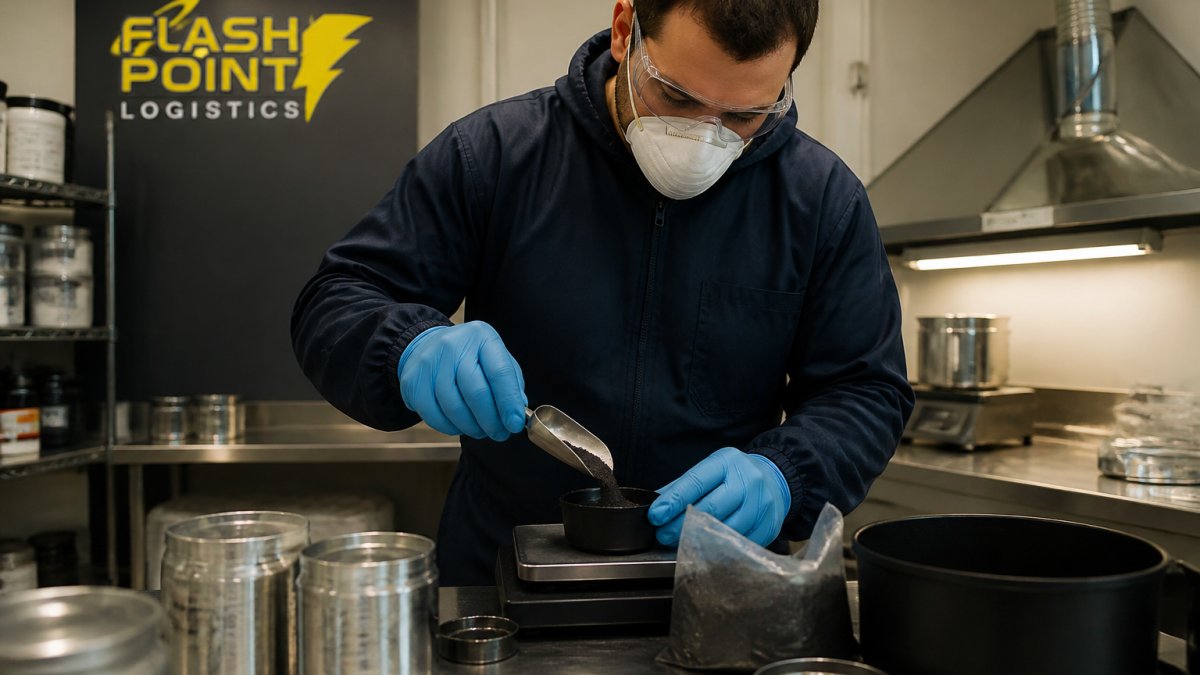
Required PPE for pyrotechnic powder handling includes:
- Nitrile gloves: Provide chemical resistance and grip without absorbing moisture
- Safety goggles: Protect eyes from powder particles and spark exposure
- Dust mask or respirator: Filter airborne powder particles; upgrade to a respirator in high-dust environments
- Protective clothing: Long sleeves and pants reduce skin contact; consider flame-resistant fabric for high-temperature work
- Steel-toed boots: Protect feet from dropped containers or equipment
Selecting and Fitting PPE Correctly
Proper fit determines PPE effectiveness. Ill-fitting equipment creates gaps where hazards can reach skin or lungs.
For gloves, choose a size that allows full finger mobility without excess material bunching. Test grip strength with sample containers before committing to a batch.
Goggles must seal around the eye area. Adjust the headband so the lens sits flush against your face.
For dust masks, fit testing is essential. The mask should create a seal around your nose and mouth.
Check PPE before each shift. Discard any equipment showing cracks, tears, or deterioration. Store PPE in a clean, dry area away from powder, solvents, or direct sunlight.
Step-by-Step Safe Handling and Loading Procedures
Controlled procedures reduce the risk of accidental ignition or spillage. Follow these steps consistently every time you handle pyrotechnic powder.
Pre-Handling Inspection and Setup
Before touching any powder, inspect your work area and materials.
Check the container for damage, leaks, or signs of moisture. Damaged containers must be segregated and reported to your supervisor. Never attempt to transfer powder from a compromised container.
Verify the powder type matches your work order. Mixing different pyrotechnic formulations creates unpredictable reactions. Confirm container labels and batch numbers.
Clear your work surface of debris, metal tools, and other pyrotechnic materials. Set up a designated powder-handling zone separate from general workshop traffic.
Ground yourself and all equipment to prevent static electricity buildup. Use grounding straps on your wrist or ankle, connected to a grounding rod driven into the earth.
Controlled Loading and Transfer Techniques
Handle powder with deliberate, slow movements. Rapid motion generates friction and heat.
Use non-sparking tools made of brass, plastic, or wood. Never use steel tools, which can strike sparks if they contact metal containers or concrete floors.
Transfer powder in small quantities. Avoid pouring directly from large containers; use a scoop or funnel to control the flow. Keep the receiving container close to the source to minimize airborne powder.
Work in a well-ventilated space. If working indoors, use local exhaust ventilation to capture powder dust at the source. Outdoor work is preferable when weather permits.
Never eat, drink, or smoke in the powder handling area. Wash hands thoroughly after handling before touching your face or food.
Preventing Static Electricity and Friction Hazards
Static electricity is a primary ignition source for pyrotechnic powder. A single discharge can ignite the material.
Wear antistatic footwear or use conductive floor mats in your work area. Ensure your grounding equipment is functioning by testing it weekly with a multimeter.
Avoid synthetic clothing that generates static. Cotton or wool clothing dissipates charge more readily. Remove watches, rings, and other metal jewelry that can hold charge.
Never drag containers across floors. Carry or roll them on casters. If powder spills, do not sweep it; use a damp cloth or vacuum equipped with explosion-proof filtration.
Friction between powder particles or between powder and container surfaces can generate heat. Keep vibrating machinery away from powder storage and handling areas.
Pyrotechnic Powder Storage: Conditions and Duration
How you store pyrotechnic powder directly affects its stability and safety. Poor storage conditions accelerate degradation and increase fire risk.
Temperature, Humidity, and Environmental Controls
Pyrotechnic powder is sensitive to temperature and moisture. Store it in a cool, dry location. Temperature should remain between 50-70°F. Avoid attics, basements, or areas exposed to direct sunlight, which cause temperature swings.
Humidity above 60% promotes moisture absorption and chemical breakdown. Use a dehumidifier in humid climates. Install moisture-monitoring devices in storage areas and check them weekly.
Ensure adequate ventilation to prevent fume accumulation. However, avoid drafts that might disturb powder or create static charge. Install fire-rated doors and ensure emergency exits are clearly marked and unobstructed.
Segregation and Container Integrity
Store pyrotechnic powder separately from other chemicals, fuels, and oxidizers. Mixing these materials, even by accident, creates extreme fire and explosion risk.
Use containers designed for pyrotechnic storage. Original manufacturer containers are preferred. Containers must be opaque, sealed, and labeled with the powder type, batch number, and date received.
Inspect containers monthly for corrosion, leaks, or damage. Replace any container showing signs of deterioration. Store containers on shelves or pallets that keep them off damp floors.
Maintain an accurate inventory log. Record quantities received, used, and remaining. This prevents overstocking and helps identify missing or misplaced powder.
Shelf Life and Inventory Management
Pyrotechnic powder degrades over time. Most formulations remain stable for 3-5 years under proper storage conditions. Check manufacturer specifications for your specific powder type.
Rotate inventory using the FIFO method: first in, first out. Use older powder before newer batches. Mark containers with the date received and scheduled use-by date.
Dispose of powder that has exceeded its shelf life or shows signs of degradation, discoloration, clumping, or unusual odor. Do not attempt to use old or compromised powder.
Pyrotechnic Powder Spill Response and Containment
Spills happen. Your response in the first minutes determines whether a spill becomes a minor cleanup or a major incident.
Immediate Actions and Scene Control
If pyrotechnic powder spills, evacuate the area immediately. Alert nearby personnel using a clear verbal warning: “Powder spill, evacuate now.”
Do not attempt to clean up the spill alone. Call your supervisor and follow your facility’s emergency procedures. If the spill is large or the powder is burning, call emergency services.
Establish a perimeter around the spill using cones or tape. Keep everyone, including curious onlookers, at least 50 feet away. Do not allow smoking, open flames, or spark-generating equipment in the spill area.
If powder is actively burning, evacuate and call 911. Do not attempt to extinguish a pyrotechnic powder fire with water or standard fire extinguishers.
Cleanup, Containment, and Professional Escalation
Small spills (less than one pound) may be cleaned by trained personnel wearing full PPE. Use a damp cloth or explosion-proof vacuum to collect the powder.
Place collected powder in a designated container labeled “Contaminated Powder, For Disposal.” Seal the container and store it separately until professional disposal.
Large spills or spills involving unknown powder types require professional response. Contact a hazardous materials cleanup company. These professionals have equipment and training for safe containment and disposal.
Document every spill. Record the date, time, location, estimated quantity, cause, and cleanup method. Report the incident to your supervisor and relevant regulatory agencies if required by your jurisdiction.
Safe Disposal of Pyrotechnic Materials
Improper disposal violates federal law and endangers sanitation workers. Use only licensed disposal providers.
Identifying Disposal-Eligible Materials
Not all pyrotechnic materials can be disposed of the same way. Classify materials before contacting a disposal provider:
- Unused powder: Original containers, unopened, no signs of degradation
- Contaminated powder: Powder mixed with foreign materials or exposed to moisture
- Defective devices: Fireworks or pyrotechnic shells that failed to function
- Packaging waste: Cardboard, plastic, and paper from pyrotechnic product shipments
Packaging waste can often be recycled or disposed of as regular trash. Pyrotechnic powder and devices require hazardous waste disposal.
Working with Licensed Disposal Providers
Contact your state’s environmental agency or the ATF for a list of licensed hazardous waste disposal facilities. Many accept pyrotechnic materials.
Prepare materials for transport according to the disposal provider’s requirements. Use original containers when possible. Label all containers clearly with contents, quantity, and date.
Never transport pyrotechnic powder in personal vehicles. Use a commercial hazmat transporter licensed by the Department of Transportation (DOT). Improper transportation can result in fines and criminal charges.
Keep records of all disposal activities. The disposal provider will issue a manifest or certificate of disposal. Retain these documents for at least three years for regulatory compliance.
Common Mistakes to Avoid When Handling Pyrotechnic Powder
Experience teaches hard lessons. Learn from others’ mistakes to avoid dangerous situations.
Never store pyrotechnic powder near heat sources, electrical equipment, or friction-prone areas.
Do not mix different powder types or brands. Each formulation has unique ignition characteristics.
Avoid handling powder when fatigued, distracted, or under the influence of alcohol or drugs.
Do not skip PPE or fit testing.
Never assume old powder is safe.
Do not store powder in areas accessible to children or unauthorized personnel. Pyrotechnic powder attracts curiosity.
Avoid using damaged or improvised containers. Containers with cracks, dents, or rust compromise safety. Always use manufacturer-approved storage.
Safe pyrotechnic powder handling protects your team, your business, and your reputation.
At Flashpoint Logistics, we supply the pyrotechnic powder and equipment your operation needs, backed by expert consulting on safe handling and regulatory compliance.
Ready to partner with a supplier who prioritizes safety as much as you do? Contact Flashpoint Logistics for pyrotechnic powder sourcing and compliance consulting today.
| Hazard Type | Prevention Method | Key Equipment |
|---|---|---|
| Static electricity | Grounding straps, conductive flooring | Wrist strap, multimeter |
| Friction and impact | Slow movements, non-sparking tools | Brass scoop, plastic funnel |
| Moisture exposure | Climate control, sealed containers | Dehumidifier, hygrometer |
| Accidental ignition | Heat source elimination, PPE | Safety goggles, dust mask |
| Spill escalation | Scene control, professional cleanup | Damp cloth, hazmat contact |
| Expired powder | Inventory rotation, shelf-life tracking | Disposal provider list |
Frequently Asked Questions
What personal protective equipment is required for safe pyrotechnic powder handling?
Minimum PPE includes nitrile or leather gloves, safety goggles with side shields, a dust mask rated for fine particulates, and flame-resistant or heavy cotton clothing. For bulk powder work, add a respirator if dust concentration is high. All PPE must fit properly and be inspected before each use. Check your facility’s safety data sheets and local regulations, as requirements may vary by powder type and operation scale.
How should pyrotechnic powder be stored to prevent ignition and degradation?
Store pyrotechnic powder in a cool, dry location between 50-70°F with humidity below 60%. Use metal or approved plastic containers with tight-fitting lids, kept away from heat sources, open flames, and direct sunlight. Segregate different powder types in separate, clearly labeled containers. Check storage conditions monthly and rotate stock using the first-in, first-out method. Never store powder near children, pets, or flammable materials.
What should I do immediately if pyrotechnic powder spills?
Stop all work and evacuate non-essential personnel from the area. Do not use a vacuum or create friction. Avoid static electricity by grounding yourself. Carefully sweep or scoop the powder into an appropriate container using non-sparking tools. Never mix spilled powder with other materials. If the spill is large, contaminated, or you suspect ignition risk, call your local fire department or a licensed hazardous materials disposal company immediately. Document the incident and report it to your supervisor.
How do I dispose of expired or unused pyrotechnic materials safely?
Do not dispose of pyrotechnic powder through regular waste streams. Contact a licensed hazardous materials or explosives disposal provider in your area. Many states require that disposal be handled by certified professionals. Keep records of all disposal transactions for compliance purposes. Your local fire marshal’s office or environmental protection agency can direct you to approved disposal facilities. Never attempt to burn, bury, or flush pyrotechnic materials.