Last Updated: October 23, 2026
Quick Summary
Stage effect consulting is expert guidance that helps venues, event producers, and pyrotechnics companies plan, design, and execute visual effects safely, matching effects to your venue’s capabilities, budget, and audience expectations. Consultants assess your space and equipment, identify regulatory requirements, design safe workflows, and source products so effects arrive on time and work as planned.
- Consultants handle venue assessment, effect selection, safety planning, equipment sourcing, technical design, crew coordination, and post-event review.
- Key equipment categories include confetti, streamers, powder products, atmospheric machines, confetti cannons, and projection integration.
- Safety checklists must be reviewed and updated before every event, covering fire suppression, electrical capacity, egress routes, and staff training.
- Cost drivers include effect count and complexity, venue access, crew certification, and equipment rental versus purchase decisions.
- Bring in a consultant for large or complex events, unfamiliar venues, significant budgets, pyrotechnic products, compressed timelines, or inexperienced teams.
Table of Contents
- What Professional Stage Effect Consulting Services Actually Include
- Stage Effect Equipment: Scope and Specialties Consultants Cover
- Building a Stage Effects Safety Checklist for Your Venue
- Creating a Stage Effects Production Brief: Planning Your Visual Impact
- Special Effects for Live Events: From Design Through Delivery
- Budgets, Compliance, and Choosing the Right Consultant
- When to Bring in a Stage Effect Consultant
- Frequently Asked Questions
What Professional Stage Effect Consulting Services Actually Include
Stage effect consulting is expert guidance that helps venues, event producers, and pyrotechnics companies plan, design, and execute visual effects safely, matching effects to your venue’s capabilities, budget, and audience expectations.
Most teams pick effects first, then try to make them fit. A professional consultant starts with your actual constraints, ceiling height, fire codes, power availability, crew experience, and builds a plan within them.
The Core Services Consultants Provide
Stage effect consultants typically handle these areas:
- Venue assessment: Measuring space, checking infrastructure, identifying limitations
- Effect selection: Recommending specific machines, confetti types, and pyrotechnic products that suit your setup
- Safety planning: Building compliance checklists and risk mitigation strategies
The scope depends on your needs. A small venue might need just equipment recommendations. A major concert production might need full-service consulting from concept through load-out.
Stage Effect Equipment: Scope and Specialties Consultants Cover
Stage effect equipment includes confetti cannons, streamers, powder products, atmospheric machines, and lighting rigs. The real value is knowing how each behaves in a specific room, where ceiling height, air handling, power, and sightlines decide the right combination.
Here is how a consultant thinks through the major effect categories, and the trade-offs that decide whether an effect works or flops.
Confetti and streamers
Confetti is the most requested effect and the easiest to get wrong. Consultants weigh paper versus metallized film (which can short electrical equipment), flame-retardant versus standard stock, and cut size against hang time: larger pieces read better from the back of a 5,000-seat room but fall faster, while smaller pieces drift longer but disappear under bright wash lighting.
Streamers
Streamers add duration confetti cannot. Heavier streamers drop predictably but can tangle in rigging; lighter ones travel farther and are harder to control. Consultants specify launch angle and pressure so streamers clear lighting trusses.
Powder products
Powder and pyrotechnic products carry the highest regulatory burden. Consultants confirm the product is legal for indoor or outdoor use in the jurisdiction, that storage meets magazine and separation requirements, and that only trained operators handle it. The question is not just “which powder” but “who is licensed to store, transport, and fire it, and where relative to the audience.”
Atmospheric machines (fog and haze)
Fog and haze are lighting tools as much as effects. A fine, long-hang haze makes beams visible without obscuring performers; heavy low-lying fog reads as a floor effect but can trip fire alarms and obscure egress. The critical constraints are ventilation and alarm interaction, many venues require coordinating with the fire alarm vendor before any haze is used, and some optical smoke detectors trigger on theatrical haze.
Confetti cannons and launchers
Compressed-air, CO2, and mechanical launchers differ in recoil, reload time, noise, and cost per shot. CO2 units are loud and cold; compressed-air units are quieter but need reliable air; mechanical units are reusable but limited in volume. Consultants calculate shots per cue, reload windows, and safe standoff distance.
Projection and lighting integration
Projection mapping and moving lights are often treated as separate from “effects,” but consultants coordinate them because haze, fog, and confetti change how light reads. A confetti drop timed to a lighting blackout can look like a mistake; the same drop under a tight follow spot looks intentional. Consultants build cue sheets sequencing effects against lighting and sound.
Sound and other effects
Consultants also plan audible effects, cannon reports, air blasts, around the sound design so they reinforce rather than mask music or dialogue, with the same standoff and hearing-protection logic.
Ask a consultant to walk you through one effect in your venue, not in general. A consultant who can explain how haze will interact with your specific alarm system, or how confetti will clear your lighting truss, is doing the job. One who only quotes product names is not.
A consultant’s job is matching equipment to your actual needs. Bigger isn’t always better: a 100-person corporate event needs different gear than a 5,000-seat theatre production.
Building a Stage Effects Safety Checklist for Your Venue
Safety isn’t optional, it’s the foundation of every professional engagement. A stage effects safety checklist identifies hazards specific to your venue and defines how to manage them.
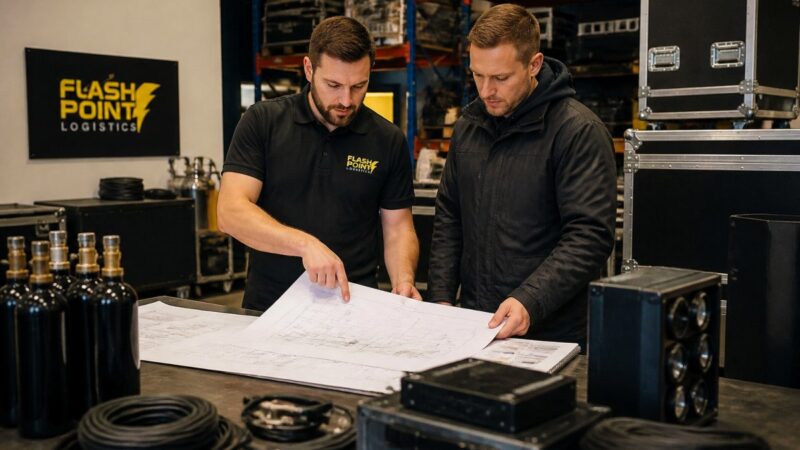
Creating one starts with a walkthrough: the consultant examines your space for fire risks, structural limits, electrical capacity, and emergency exits, checks local fire codes and building permits, and identifies what equipment you have versus what needs renting or purchasing.
The checklist becomes a working document, reviewed before every event and updated as equipment or regulations change.
Key items on any safety checklist include:
- Fire suppression systems location and type
- Electrical capacity and circuit breaker locations
- Emergency egress routes and signage
A safety checklist that sits in a drawer is worthless. It needs to be reviewed, updated, and actually used before every show. If your consultant doesn’t insist on this, find a different consultant.
The best consultants build checklists specific to your venue, not generic templates. They know your space’s quirks, which staff need which training, and what can go wrong in your particular setup.
Creating a Stage Effects Production Brief: Planning Your Visual Impact
A stage effects production brief translates creative ideas into technical specifications, where the designer’s vision meets the engineer’s reality.
The brief typically includes:
- Effect descriptions and timing cues
- Equipment specifications and quantities
- Power and rigging requirements
A good production brief answers specific questions. How many confetti cannons do we need? Where exactly do they go?
The consultant builds this brief by asking detailed questions: venue, attendee count, budget, creative goal, time constraints, and crew experience level.
The production brief is your insurance policy. It ensures everyone knows their role, equipment arrives on time, and nothing gets forgotten during the event.
Special Effects for Live Events: From Design Through Delivery
Special effects for live events require coordination across multiple stages: design, procurement, setup, execution, and breakdown.
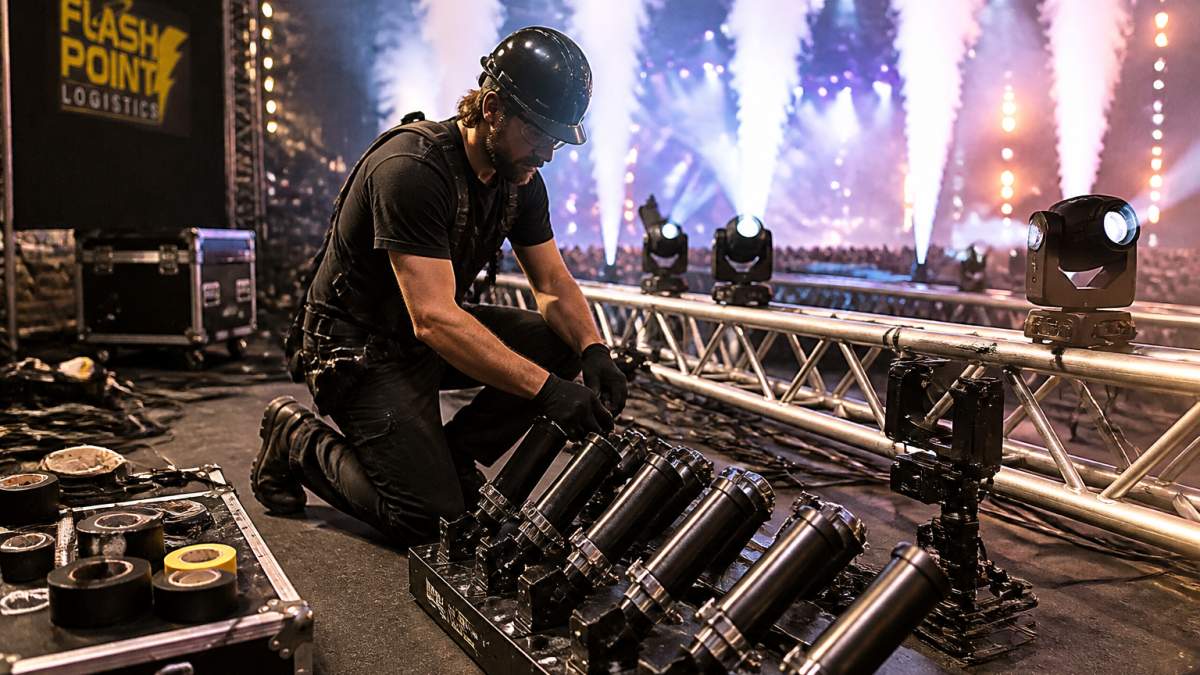
Procurement comes next: equipment is ordered, stage fluids, confetti, powder products, and machines sourced, delivery timelines confirmed, and backup equipment identified.
Setup typically happens the day before or morning of the event. Rigging crews install confetti cannons and lighting rigs.
After the event, equipment is broken down, cleaned, and packed, inventory checked, damage documented, and lessons captured.
Budgets, Compliance, and Choosing the Right Consultant
Budgets for stage effect consulting vary widely, and no responsible consultant quotes a number before understanding the venue. What a consultant can do is explain the cost drivers so you can budget intelligently and compare proposals on equal terms.
What drives cost
The biggest cost drivers are effect count and complexity, venue access, crew size and certification, equipment rental versus purchase, and permitting. A single confetti cue in a familiar room is a small engagement; a multi-cue show with pyrotechnics, haze, projection, and a compressed load-in window is a different project entirely. Access matters more than people expect: a venue with a freight elevator, loading dock, and wide stage door is cheaper to work in than a ballroom where every case comes through a lobby.
Equipment versus service
Consultants help you decide what to own and what to rent. Confetti cannons and atmospheric machines are often rented for one-off events because storage, maintenance, and fluid inventory are ongoing costs; reusable mechanical launchers and lighting fixtures may make sense to purchase if you produce regularly. The consultant models total cost, purchase price plus storage, maintenance, consumables, and operator training, rather than comparing sticker prices.
Questions to ask when comparing consultants
- What is included in the fee, design only, or design through on-site supervision?
- Who obtains permits, and is that billed separately?
- What is the change-order process if the show evolves?
Compliance and permitting
Compliance is non-negotiable, and it is where inexperienced teams get surprised. Pyrotechnic and flame effects are regulated federally by the Bureau of Alcohol, Tobacco, Firearms and Explosives (ATF) for storage and licensing, and by the Occupational Safety and Health Administration (OSHA) for workplace safety.
A professional consultant knows these layers and sequences them: confirming which codes the AHJ enforces, obtaining the permit, coordinating with the venue’s fire alarm vendor before haze or pyrotechnics are used, and documenting compliance.
Permits are issued by the authority having jurisdiction, not by the consultant, and timelines vary. Start the permitting conversation as soon as the effect plan is set; a permit that arrives the day of the show is a permit that can shut the show down.
Choosing the right consultant
Look for a consultant with these qualities:
- Experience with your venue type (theatre, concert hall, corporate event, outdoor festival)
- Knowledge of local regulations and the permitting process in your jurisdiction
- Relationships with reliable equipment suppliers
- A track record of on-time, on-budget projects
Ask about past projects. Request references from venues they’ve worked with. Understand their fee structure upfront. Confirm insurance. A consultant who welcomes these questions is usually the one worth hiring.
Venues with complex technical requirements, events with large budgets, and productions where safety and precision are critical. Consultants add the most value when the stakes are high and the timeline is tight.
When to Bring in a Stage Effect Consultant
Not every event needs a consultant. A small corporate party with a few confetti cannons might not.
Bring in a consultant when:
- Your event is large or complex (more than 500 attendees, multiple effect types, tight timing)
- Your venue is unfamiliar (first time using a new space, unusual architecture, unknown infrastructure)
- Budget is significant (effects are a major part of your production value, failure is costly)
- Safety is critical (pyrotechnic products, audience proximity to effects, complex rigging)
Stage effects consulting transforms good events into great ones, making creative vision technically feasible, safe, and reliable.
Flashpoint Logistics brings together equipment sourcing, technical expertise, and safety knowledge to support your event from concept through execution.
Ready to plan your next event with confidence? Shop our equipment selection or contact our team for consulting support.
Frequently Asked Questions
What should stage effect consulting services include?
Professional stage effect consulting covers equipment selection, venue-specific design, safety compliance, technical specifications, installation support, and operator training. A qualified consultant assesses your venue’s infrastructure, identifies regulatory requirements for your state, recommends equipment that fits your budget and space, and ensures all systems integrate safely with existing production infrastructure. This includes reviewing your production brief, validating equipment certifications, and providing post-installation support during your first events.
How do you plan stage effects for a live event?
Start by defining your visual goals and the mood you want to create. Work with a consultant to assess your venue’s technical capabilities, power availability, and safety constraints. Document all specifications in a production brief that includes effect timing, equipment placement, operator positions, and safety zones. The consultant will recommend specific equipment, validate compliance with state regulations, coordinate with your production team, and establish clear communication protocols for the day of the event to ensure seamless execution.
What safety factors should be considered when using stage effects?
Critical safety factors include proper equipment certification and maintenance, operator licensing and training, audience distance from effect zones, structural load capacity of the venue, electrical safety and grounding, fire suppression access, emergency shutdown procedures, and compliance with state and local pyrotechnics regulations. A stage effects safety checklist should document all hazards, identify control measures, establish exclusion zones, assign responsible personnel, and include contingency plans. Professional consultants ensure your setup meets these requirements before any performance.
When should an event producer bring in a stage effect consultant?
Bring in a consultant early in your planning process, especially if you’re using pyrotechnics, confetti cannons, fog machines, or other specialized equipment for the first time. Consultants are essential when your venue is unfamiliar with stage effects, when regulatory compliance is uncertain, when you need custom effect sequencing, or when you’re working with a tight budget and need expert guidance on equipment choices. Early involvement prevents costly mistakes, ensures compliance, and maximizes the visual impact of your production.
