
Last Updated: November 1, 2026
Quick Summary
Good pyrotechnic inventory management starts with knowing exactly what you have, where it is stored, and when it expires. Keep one master spreadsheet with a row per lot, update it the same day stock moves, and reconcile every event before the crew is released.
- Track one product lot per row so problems can be traced and recalled items found quickly.
- Store product in original packaging, in a dry, cool, ventilated area, and off the floor.
- Assign each outgoing item to a specific event and record check-out time, person, and expected return.
- Compare returned stock against check-out records after every event before closing the job.
- Use older lots first and pull damaged or expired items from active inventory right away.
Table of Contents
Event pyrotechnic inventory is one of the hardest stock problems in live production. Event crews regularly run into the same pattern: a team counts stock by memory, a case goes missing between shows, and nobody notices until the next load-in. Good pyrotechnic inventory management starts with a simple habit: knowing exactly what you have, where it sits, and when it expires.
Most teams lose control for ordinary reasons. Stock moves between a warehouse, a truck, and a venue. Different crew members sign items in and out with different methods. Partially used cases get returned without a note. Over a season, those small gaps add up to wasted money and real safety risk.
Common causes of inventory drift:
- Items leave the warehouse without a check-out record
- Partial cases return to storage unlabeled
- Two shows run in the same week with shared stock
- Expired product stays on the shelf because no one checked dates
- Counts are done from memory instead of from a written list
A common mistake is treating inventory as a yearly chore. Stock changes with every event. The fix is a repeatable process that runs before, during, and after each show.
Keep your records in one place and update them every time stock moves. That single habit prevents most of the problems above.
Building an Event Inventory Spreadsheet Template
A basic spreadsheet is the fastest way to bring order to event pyrotechnic inventory. You do not need expensive software to start. You need consistent columns and one person responsible for keeping them current.
Your template should track the details that matter most on a live job. Use these columns as a starting point:
- Product name and manufacturer
- Lot or batch number
- Quantity on hand
- Storage location
- Expiration date
- Last inspected date
- Assigned event or job number
- Condition notes
Keep every row tied to a single product lot. Mixing lots in one row makes it impossible to trace a problem later. If a batch is recalled or damaged, you need to pull every affected item fast.
Use color coding for quick scanning. Mark items nearing expiration in yellow and expired items in red. Sort the sheet by expiration date once a month so the oldest stock gets used first.
Setup steps:
- List every product category you stock
- Add one row per lot, not per case type
- Set a fixed location code for each storage area
- Add a reminder to review expiration dates monthly
- Lock the template so only the inventory lead edits master copies
Once the spreadsheet exists, the real work is discipline. Every check-in and check-out must reach the sheet the same day.
Pyrotechnic Product Storage and Handling Basics
Storage conditions affect both product life and safety. Before any inventory system works, the products must be stored correctly. Keep pyrotechnic product in a dry, cool, and well-ventilated area away from heat sources, direct sunlight, and ignition hazards. Store product in its original packaging, and keep it off the floor.
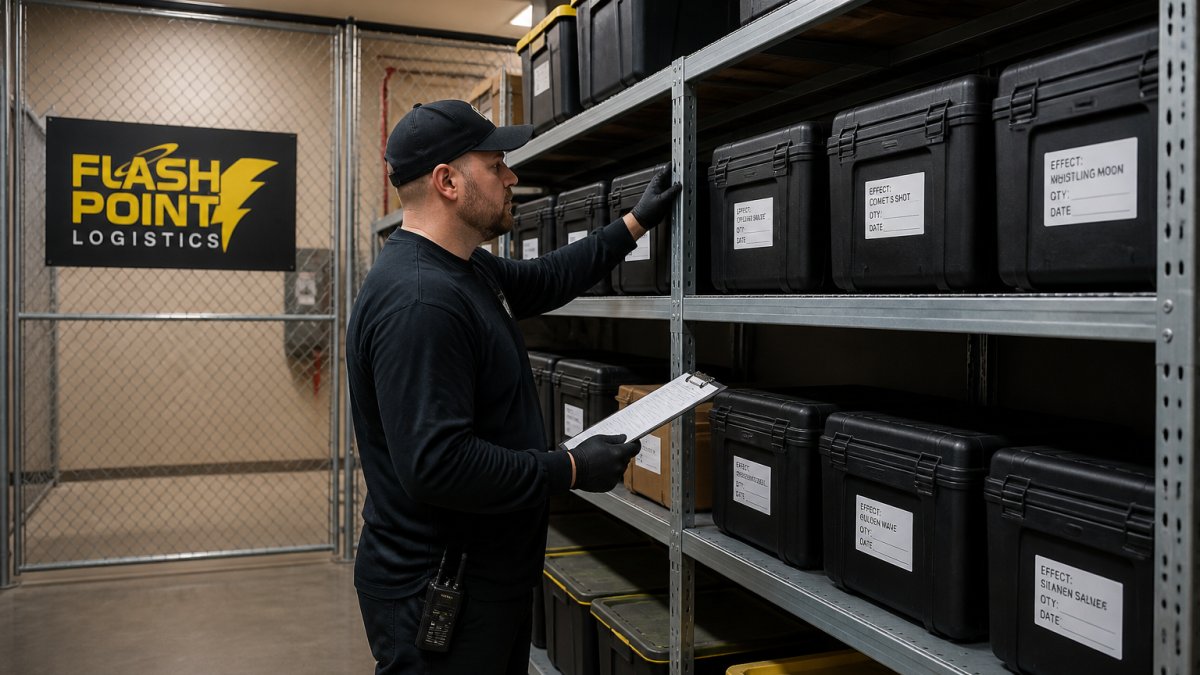
Separate categories by hazard level and never store incompatible items together. Clearly label each storage area so crew members know what belongs where. A clean, organized equipment cage with labeled shelving makes checking stock faster and safer.
Handling rules matter just as much as storage. Limit the number of people who handle energetic products. Use only approved tools, and never open or repack product in a storage area. Follow the manufacturer’s instructions and the applicable regulations for your operation.
Basic handling checklist:
- Product stored in original, intact packaging
- Storage area dry, cool, and ventilated
- Hazard categories stored separately
- Storage areas clearly labeled
- Only trained staff handle product
- Damaged packaging removed from stock immediately
Watch out: damp storage is one of the fastest ways to ruin product and create a hazard. Check humidity regularly, especially in warehouses that sit near loading docks.
For more detail on handling dry product, see our guide to safe pyrotechnic powder handling. For storage practices specific to stage effects, read best practices for stage effect storage.
Tracking Stock Across Multiple Shows
The hardest part of event inventory is tracking stock that moves between several jobs. A single case might leave the warehouse for a Friday show, return on Sunday, and go out again the following week. Without a clear process, you lose track fast.
Assign every outgoing item to a specific event before it leaves the warehouse. Record the check-out time, the name of the person taking it, and the expected return date. When items return, inspect them, update the count, and note any damage.
Shared stock across overlapping shows causes the most confusion. Set a rule that each lot can only be assigned to one active job at a time. If two events need the same product, split the lot and record each portion separately.
Pyrotechnic supply logistics for live events covers how to plan movements and restocking across busy schedules. Use that planning to avoid last-minute shortages.
When Software Makes Sense
A spreadsheet works well for small crews with a few shows a month. Software becomes worth considering when you run many events, multiple warehouses, or several people editing records at once. Look for tools that support lot tracking, expiration alerts, and check-in and check-out logs. Whatever you choose, make sure the system matches how your crew actually works. A tool nobody uses is worse than a spreadsheet everyone keeps current.
Post-Event Inventory Reconciliation Step by Step
Reconciliation is the step most teams skip, and it is where the real losses get caught. After every event, compare what left the warehouse with what came back. Any gap needs an explanation before the next job starts.
Follow these steps after each show:
- Collect all returned stock and sort it by product and lot
- Count each item and compare it against the check-out record
- Inspect every returned item for damage, moisture, or packaging issues
- Record any shortage with the person and job responsible
- Move damaged or expired items to a quarantine area
- Update the master inventory sheet the same day
- Confirm the closing count before releasing the crew
Do not close a job until the numbers match or the gap is explained. A common mistake is letting returns sit in a truck overnight. Stock that sits unchecked is stock you cannot account for.
Preventing Expiration and Damage Losses
Expired or damaged product is money lost, and it can create a serious safety problem. Check expiration dates at every check-in and during monthly reviews. Use older lots first, a practice often called first in, first out.
Damage usually comes from poor storage, rough handling, or moisture. Inspect packaging every time stock returns from an event. Pull anything crushed, wet, or torn from active inventory right away.
Buying replacement product should be planned, not rushed. Work with licensed, verified suppliers, and confirm the licensing and storage rules that apply to your operation before you order. Flashpoint Logistics offers guidance on sourcing, and you can buy professional pyrotechnic stage powder through a verified channel.
Setting Up Your First Inventory Review This Week
You do not need a full system to start improving event pyrotechnic inventory today. Set aside one hour this week to take a complete count of your stock. Build your spreadsheet, log every lot, and mark expiration dates. Then schedule a recurring review once a month.
Pick one person to own the inventory record, and give them authority to stop a job if the count does not match. Consistent habits, not perfect software, are what keep stock under control. Start with the count, and the rest of the process will follow.
Frequently Asked Questions
How do you track pyrotechnic inventory for live events?
Track every item from receipt to show day to return. Record each product by lot number, quantity received, storage location, and expiration date in one shared log. Assign one person to update the log at check-out and check-in, so the count reflects what is physically on hand. Reconcile the log against the physical count before and after every event. Discrepancies caught on the same day are far easier to explain and resolve than those found weeks later during the next order cycle.
What information should a pyrotechnic inventory log include?
A useful log includes the product name, manufacturer, lot or batch number, purchase date, expiration date, quantity on hand, storage location, and the event or show each item was assigned to. Add columns for quantity issued, quantity returned, and quantity consumed or destroyed. Include the name of the person who signed items out. Keeping these fields consistent lets you answer audit questions quickly and spot patterns, such as a product line that expires before it gets used.
How should event pyrotechnics be stored and secured?
Store pyrotechnic products in a dedicated, locked, dry, and ventilated magazine or storage area that meets applicable federal, state, and local requirements. Keep products in their original packaging, separated by hazard class, and away from heat sources and ignition sources. Limit access to authorized, trained personnel and keep a current access list. Confirm current storage quantity and distance limits with your local authority having jurisdiction and with the applicable NFPA and ATF rules before setting up a site.
What should an event team do with unused pyrotechnic products after an event?
Return unused, undamaged products to the secured storage location and log them back into inventory with their lot numbers. Do not leave unused products in vehicles or on the production site. Inspect returned products for damage, moisture, or packaging failure, and quarantine anything questionable for disposal under your supplier’s guidance and applicable regulations. Update the post-event reconciliation so the count matches the physical stock before the team leaves.
